The National Social Register: Foundation of Targeted Safety Nets
Harmonizing evidence-based social safety nets across all 36 States and the FCT in strategic partnership with the World Bank, covering over 15 million poor and vulnerable households.
Grassroots Village Assemblies & Direct Household Enumeration
Targeting poor and vulnerable households through participatory village assemblies, community validation meetings, and localized objective poverty indicators nationwide.
Advanced Biometric Identity Integration with NIMC
Deploying over 1,000 biometric devices and validating more than 1.62 million National Identification Numbers (NIN) to ensure ghost-free, transparent cash disbursements.
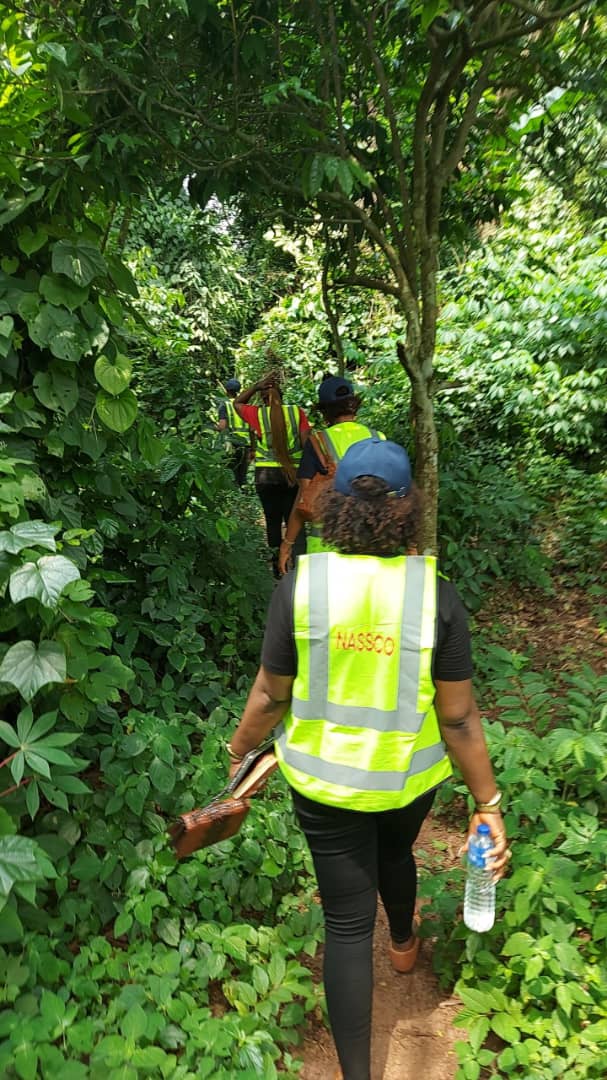
Grassroots Village Enumeration
Direct participatory assemblies ensuring depoliticized, transparent selection of vulnerable households.
The Single Source of Truth for Targeted Social Protection in Nigeria.
The National Social Safety Nets Coordinating Office (NASSCO) was established to consolidate, coordinate, and institutionalize social safety net delivery across Nigeria. Working under the National Social Investment Programme Agency (NSIPA) and in partnership with the World Bank, NASSCO manages the authoritative National Social Register (NSR).
Through open village consensus assemblies and objective Proxy Means Testing (PMT), NASSCO ensures that federal cash disbursements, livelihood support, and development aid reach the verified poor with complete audit transparency.
How the National Social Register Is Built
Explore the four-stage community-driven verification protocol that protects registry integrity and prevents political bias.
Village Assembly Consensus
Community elders, women leaders, youth heads, and residents meet openly in public village squares to collectively define poverty markers and nominate households facing extreme economic distress.
Key Audit Checkpoints
- Witnessed by Local Traditional Leaders
- GPS Geotagged Enumeration Devices
- Zero Data Leakage / NDPR Compliant
Evidence-Based Social Protection Architecture
NASSCO coordinates targeting systems, digital registries, and transparent grievance redress to guarantee equity and accountability.
National Social Register (NSR)
The Single Source of Truth for Social Protection in Nigeria
A centralized, verified digital registry of poor and vulnerable households identified through rigorous Community-Based Targeting (CBT). Used by federal MDAs and international development partners to deliver shock-responsive social transfers.
- Community-level consensus identifying the poorest households
- Biometric capture integrated with National Identification Numbers (NIN)
- Strict data privacy standards aligned with NDPR protocols
Community-Based Targeting (CBT)
Participatory, Transparent, and Depoliticized Identification
Targeting begins at the grassroots. Village development committees and community elders meet in open assemblies to define poverty criteria, map vulnerable families, and validate household claims publicly.
- Zero political interference in community selection assemblies
- Followed by Proxy Means Test (PMT) enumeration
- Public display of provisional lists for community verification
NASSP Scale-Up (NASSP-SU)
Co-funded with the World Bank for Shock-Responsive Delivery
The National Social Safety Nets Project Scale-Up expands coverage to millions of households affected by economic shocks and inflation. Compresses payment durations from 6 to 3 months and transitions to 100% digital transfers.
- Household base expanded from 10.2M to 15M target records
- Direct integration of BVN and digital payment wallets
- Automated monitoring and evaluation across all 774 LGAs
Grievance Redress Mechanism (GRM)
Accountability, Feedback & Citizen Dispute Resolution
Ensures that community members, excluded persons, and beneficiaries can report grievances, payment delays, or field misconduct via toll-free phone lines and local grievance committees.
- Toll-free national citizen hotlines
- Ward-level grievance resolution committees
- Whistleblower protection and anti-extortion enforcement
Depoliticized Grassroots Selection • Biometric NIMC Validation
The National Social Register (NSR) is generated solely through open village consensus assemblies and verified field enumeration. No political quotas, agent fees, or unauthorized enrollment portals are ever utilized.

Dr. Funmilola Olotu
National Programme Manager, NASSCO • NSIPA
“Speed is important, but our focus is building a reliable National Social Register for Nigeria with accurate and high-quality data. By ensuring the information is rigorous and biometric-checked, we build trust, improve national resource allocation, and support lasting social security programs.”